What Is Dry Down
Dry down is the final stage of a perfume’s evolution on skin—when the base notes settle and the true long-lasting character of the fragrance reveals itself.

When you spray a perfume, what you smell in the first few minutes is not the full story. Fragrance evolves in stages, and the final stage—often the most important for wear and identity—is called the dry down. If you have ever loved a perfume in the opening but felt unsure an hour later, you have experienced why dry down matters.
What does "dry down" mean?
Dry down is the phase where a perfume has largely evaporated from its volatile top and heart materials, and the scent that remains is driven mostly by base notes. This is the "settled" version of the perfume—the one that stays closest to the skin and lasts the longest.
It is called "dry down" because, historically, perfumers and reviewers would let a blotter (or skin) dry after application and then evaluate the fragrance once the early sparkle fades and the deeper materials reveal themselves.
Perfume stages: where dry down fits
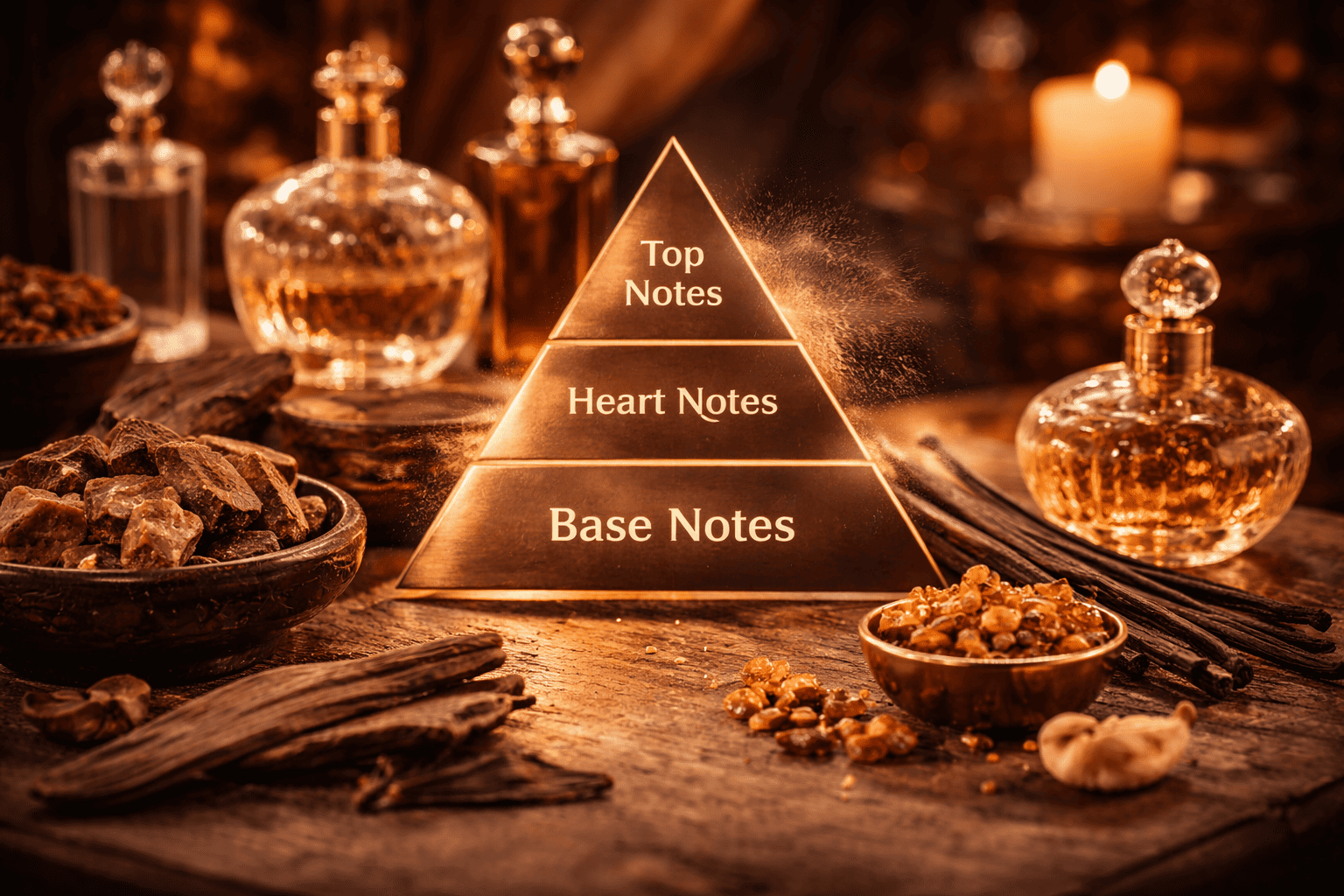
- Top notes (Opening): The first impression—bright, airy, often citrus, herbs, aldehydes. Usually lasts 5–20 minutes.
- Heart notes (Development): The core character—florals, spices, fruits, aromatics. Often lasts 1–3 hours.
- Base notes (Dry down): The foundation—woods, resins, musks, amber, vanilla, patchouli. Often lasts 4–12+ hours depending on formula and skin.
Why dry down is the "true signature" of a perfume
Most people fall in love with the opening because it is immediate and expressive. But the dry down is what you (and others) live with for the rest of the day. It influences:
- Longevity: How long the fragrance remains noticeable on skin.
- Comfort & identity: The part that feels like "you" after the perfume settles.
- Clothing memory: Base materials often cling to fabric and leave a lasting trace.
What does dry down smell like?
Dry down usually feels warmer, smoother, and deeper than the opening. You may notice:
- Woods: cedar, sandalwood, vetiver
- Amber & resins: labdanum, benzoin, frankincense-like warmth
- Musks: clean, skin-like softness or a subtle "laundry" aura
- Gourmands: vanilla, tonka, cacao, creamy sweetness
- Earthy notes: patchouli, mossy facets, dry spice
How long does it take to reach the dry down?
On average, a perfume begins to enter dry down around 2–4 hours after application, but it depends on concentration, ingredients, and your skin. Some perfumes dry down faster (fresh colognes), while others take longer (dense ambers, oud-style bases, resinous orientals).
Why dry down changes from person to person
Dry down is strongly affected by skin chemistry and environment. Factors include:
- Skin type: Oily skin often extends longevity; very dry skin can "eat" the top quicker.
- Temperature & humidity: Heat amplifies projection; cool air can make a perfume feel tighter and drier.
- Moisturizer & layering: Unscented lotion can help base notes last longer.
- Diet, stress, and hormones: Subtle shifts can alter how musks and woods read on skin.
How to test dry down properly (the easy method)
If you want to judge a perfume fairly, do not decide in the first five minutes. Try this:
- Spray once on skin (wrist or inner elbow). Do not rub.
- Smell at 10 minutes (opening), 1 hour (heart), and 3–5 hours (dry down).
- Pay attention to what remains: is it smooth, woody, musky, sweet, or sharp?
- If possible, wear it for a full day once—dry down is where commitment is decided.
Dry down vs. sillage vs. projection
These terms are connected but not the same:
- Dry down: the final settled scent on skin (mostly base notes).
- Projection: how far the scent radiates from you (often strongest early on).
- Sillage: the scented trail you leave behind as you move.
Common misconception: "Dry down is always better"
Not always. Some perfumes have a stunning opening and a simple base; others have a quiet start and a gorgeous dry down. The best way to choose is to decide which phase you care about most—first impression, mid-day character, or long-lasting signature.
Key takeaway
Dry down is the perfume's lasting identity. If a fragrance feels "right" after a few hours, it is usually a strong match. When in doubt, let the perfume tell its full story—then decide.