Why Some Perfumes Feel Expensive Even Before You Smell Them
Some perfumes feel luxurious before they are even sprayed. From packaging and bottle design to cultural cues and emotional expectation, the idea of “expensive scent” often begins in the mind before it reaches the skin.
Why Some Perfumes Feel Expensive Even Before You Smell Them
Luxury in perfumery does not begin with scent alone. Long before a fragrance touches the skin, certain perfumes already feel expensive — through their bottle, their visual language, their materials, and the quiet signals they send to the mind.
This reaction is not accidental. It is shaped by psychology, design, and cultural expectation. In many cases, what people call an “expensive perfume” is not only about ingredients or performance, but about the emotional impression created before the first spray.
The psychology of anticipation
Human perception is strongly influenced by expectation. When a perfume is presented through heavy glass, balanced proportions, minimal typography, or carefully chosen colors, the brain begins to assign value before the scent is even experienced.
This is known in psychology as pre-sensory perception — the idea that visual and emotional cues shape how we interpret what comes next.
Packaging as a signal of luxury
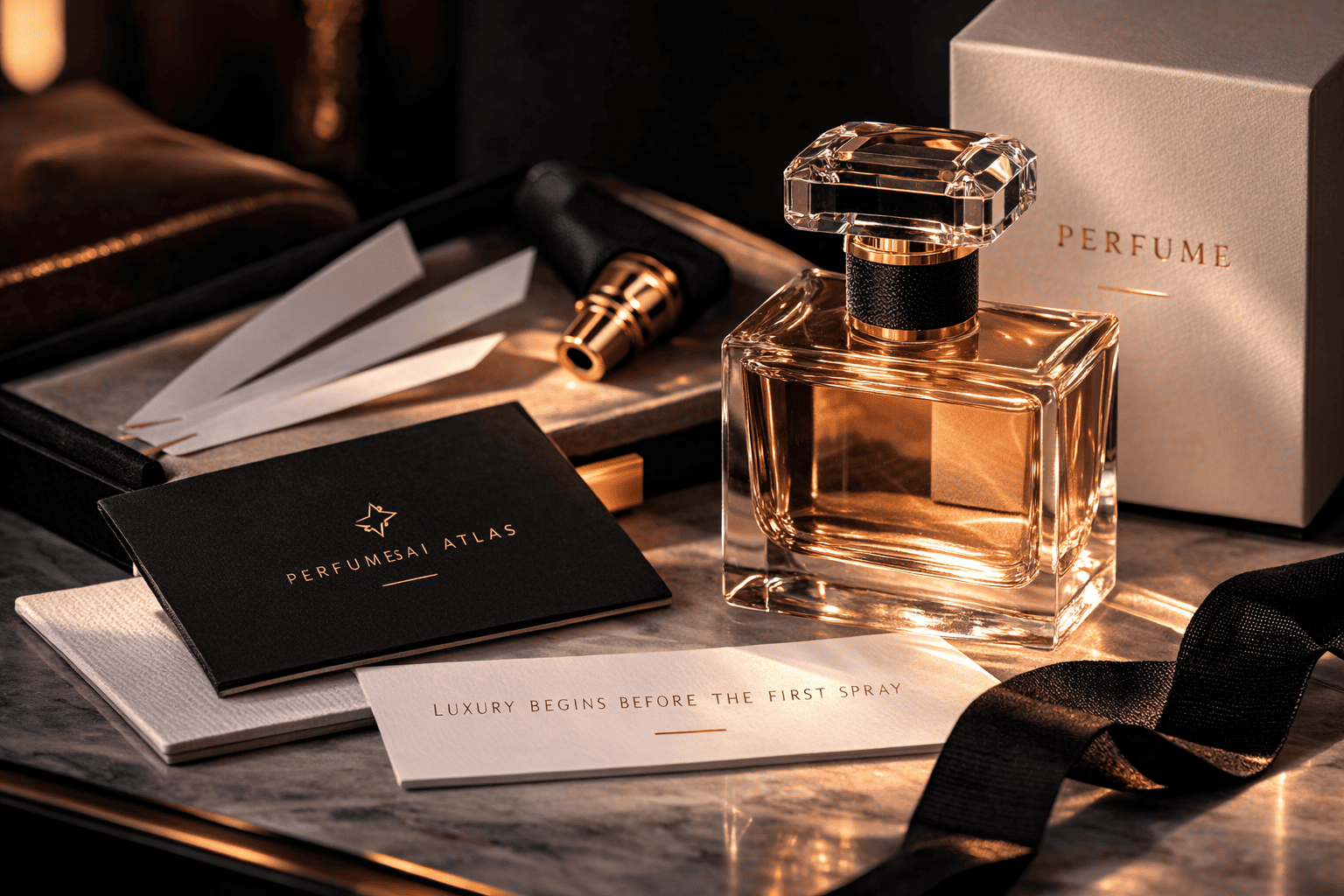
Perfume packaging plays a major role in perceived value. Small details often communicate sophistication more effectively than loud design:
- Weighted bottles that feel substantial in the hand
- Precise caps and clean finishing
- Muted or restrained color palettes
- Typography that suggests confidence rather than excess
These choices create an immediate sense of seriousness and refinement. Even before the fragrance is tested, the object itself begins to tell a story.
Minimalism, rarity, and emotional pricing
In luxury, restraint often feels more expensive than noise. A perfume that appears calm, deliberate, and understated may feel more premium than one that tries too hard to impress.
This is because luxury is often associated with control, rarity, and confidence. The less a product needs to explain itself, the more elevated it can appear.
When scent meets expectation
Once the perfume is sprayed, the mind does not start from zero. It compares the scent to the emotional image already formed by the object, the name, the setting, and the moment.
If the fragrance then reveals smooth base notes, a refined dry down, or an elegant texture on skin, the impression of luxury becomes even stronger.
Luxury is also cultural
What feels expensive is never purely universal. In some cultures, luxury is associated with softness, subtlety, and understatement. In others, it is connected to richness, projection, and lasting presence.
In the Gulf, for example, depth, warmth, and strong materials such as oud, musk, and amber often signal refinement. In other markets, freshness and minimalism may play that role.
This is why the feeling of luxury in perfume is partly sensory, but also deeply cultural.
More than ingredients alone
Expensive-smelling perfume is not always the one with the rarest raw materials. Sometimes it is the fragrance that feels coherent — where the bottle, the visual identity, the texture of the scent, and the emotional message all align.
That coherence creates trust. And trust is often what people describe when they say a perfume feels luxurious.
Key takeaway
Some perfumes feel expensive before you smell them because luxury begins in perception. Bottle design, visual restraint, cultural cues, and emotional expectation all shape the experience before the fragrance even reaches the skin.